
Spot rate vs forward rate explains the difference between a rate used for a current transaction and one agreed for a future transaction. A spot rate reflects the current market price. A forward rate sets an agreed price or rate for a transaction that will happen on a set future date.
Knowing how these rates work can make currency planning easier. First Class Currency helps individuals and businesses understand their currency exchange options, so they can choose an approach that fits their timing and needs.
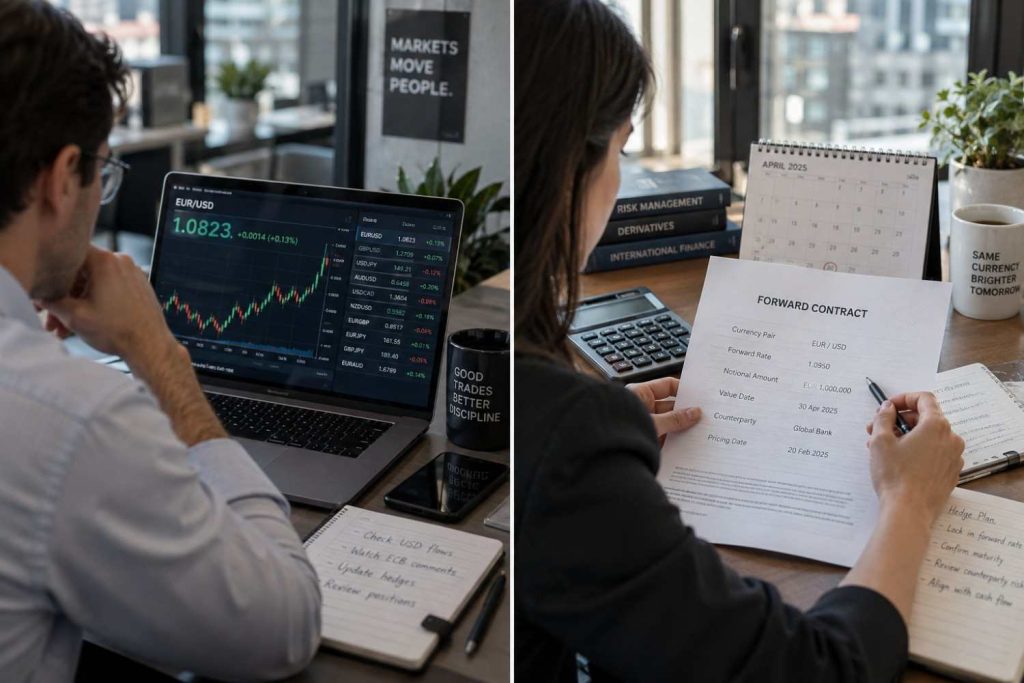
A spot rate is the current market rate used to exchange one currency for another. When comparing spot rate vs forward rate, timing is one of the main differences. A spot rate applies to an exchange made at the current market price.
The spot exchange rate can move throughout the trading day. Currency prices change as people, banks, and businesses buy and sell currencies around the world.
Several factors can cause the rate to move:
These factors make global currency exchange rates change often.
Many FX spot transactions settle within two business days. However, the exact timing can depend on the currencies being exchanged. For example, a US business may need British pounds to pay a UK supplier. It can exchange US dollars for pounds using the current spot rate.
Understanding spot vs forward rate, forward rate vs spot rate, and forward vs spot rate can help explain when each option applies. The spot exchange rate vs forward exchange rate comparison becomes more useful when planning future currency needs.
A forward rate is an exchange rate agreed in advance for a currency exchange on a future date. In a spot rate vs forward rate comparison, a forward rate gives more certainty about the rate you will use later. A business can arrange a forward contract when it knows it will need foreign currency in the future. The business agrees on the rate and other terms before the exchange takes place.
A forward contract can help a business plan future currency costs. It may be useful for:
The spot vs forward rate choice often depends on when a business needs the currency. Comparing forward rate vs spot rate can also help businesses understand their exposure to market changes. A forward rate is not simply a forecast of the future spot rate. Its price can reflect the current spot rate and interest rate differences between currencies.
For example, a US company may need euros in three months. It can agree on a forward rate in advance instead of waiting for the future market rate. This forward vs spot rate choice gives the company more cost certainty. Understanding spot exchange rate vs forward exchange rate can make future currency planning clearer.
The main difference between spot rate vs forward rate is when you exchange the currency and how you set the rate. Both options serve different needs. Your payment date, budget, and plans can help you decide which option may suit your situation.
The table below shows the main differences in simple terms.
Factor | Spot Rate | Forward Rate |
Timing | Used when you need to exchange currency soon. | Used for an exchange planned for a future date. |
Rate setting | Based on the current market rate. | Agreed in advance for a future exchange. |
Settlement | Often settles within two business days, depending on the currency pair. | Settles on the future date set in the contract. |
Price certainty | The rate can change until you book the exchange. | The agreed rate provides more certainty for a future payment. |
Exposure to rate changes | You face market changes before you book the rate. | The agreed rate reduces exposure to later market changes. |
Common uses | Useful for near-term payments and currency transfers. | Often used for planned business payments and future costs. |
Flexibility | May suit payments that need to happen soon. | Terms are agreed in advance and may be less flexible. |
Business planning | Works well when future rate certainty is less important. | Helps businesses plan known foreign currency costs. |
Timing is an important part of the spot vs forward rate choice. A spot rate may suit you when you need foreign currency soon. A forward rate may suit a known payment that will happen later. For example, you may need euros this week to send money abroad. A spot exchange may meet that need. A business paying an overseas supplier in three months may prefer to agree on a rate in advance.
The forward rate vs spot rate difference also affects how much market movement matters. With a spot transaction, the market rate can rise or fall before you book your exchange. This means your final currency cost may change.
A forward contract works in a different way. Once you agree to the rate and terms, later market changes do not change that agreed rate. This can make costs easier to plan. However, you may not benefit if the market later moves in your favor.
The forward vs spot rate choice also depends on how certain your plans are. Spot exchanges may offer more freedom when you have a near-term payment. Forward contracts are often better suited to known future payments. When comparing the spot exchange rate vs forward exchange rate, think about your payment date, budget, and need for certainty. Neither option is always better. The right choice depends on when you need the currency and how much rate certainty matters to you.
Spot and forward exchanges both let you change one currency into another. However, they work on different timelines. Understanding spot rate vs forward rate can help you see which method may fit your payment plans.
A spot exchange uses the current market rate when you arrange the transaction. The process is simple and often suits people or businesses that need currency soon.
Here is how it usually works:
Exchange rates can move throughout the day. The rate you see earlier may change before you book the transaction. For example, a US company may need British pounds to pay a supplier in the UK. It can use a spot exchange to buy the pounds needed for the payment.
This is one reason timing matters when looking at spot vs forward rate options. It can also matter when comparing different money transfer destinations and payment needs.
A forward exchange works differently because you agree on terms for a future currency exchange.
The process usually includes these steps:
For example, a US importer may need euros in three months to pay a supplier. The company can arrange a forward contract rather than wait for the future spot rate. When comparing forward rate vs spot rate, this approach can make future costs easier to plan. If the market moves against the business, the agreed rate can reduce that uncertainty.
However, fixing a rate has another side. If the future spot rate becomes more favorable, the business generally cannot use that better rate for the contracted amount. The forward vs spot rate choice therefore depends on timing, certainty, and payment needs. Comparing the spot exchange rate vs forward exchange rate can help businesses understand how each option fits their plans.
Many factors can cause currency rates to rise or fall. These changes can happen quickly or build over time. When comparing spot rate vs forward rate, it helps to know what drives each rate.
Interest rates can affect how much demand there is for a currency. Higher rates may make a currency more attractive to some investors. Lower rates can have the opposite effect. Interest rate differences between two countries also play an important role in forward pricing. This is one key point when comparing spot vs forward rate options.
Inflation means that prices for goods and services rise over time. High inflation can reduce the buying power of a currency. Markets also watch how inflation may affect future interest rates. As a result, new inflation reports can cause exchange rates to move.
Economic reports give the market clues about the strength of a country’s economy. Traders and businesses watch several types of data, including:
These reports can affect the forward rate vs spot rate in different ways.
Central banks set key interest rates and guide monetary policy. Their decisions can have a strong effect on currency markets. A change in rates can affect the current currency value. It can also change forward pricing. This makes central bank news important when looking at the forward vs spot rate.
Elections, new laws, conflicts, and major world events can create uncertainty. This may cause people and businesses to change which currencies they buy or sell. The impact can depend on the event and the currencies involved. Your reasons for transfer may also affect how important these market changes are to you.
Currency prices also depend on how much people want to buy or sell. More demand can push a currency higher. More selling can place pressure on its value. Supply and demand can change because of trade, investment, news, or market views. These shifts often affect current spot rates first. Understanding these factors makes the spot exchange rate vs forward exchange rate comparison easier. It can also help you understand why the rate available for a currency exchange may change.
Choosing between spot rate vs forward rate depends on your needs, timing, and plans. One option is not always better than the other. The right choice depends on when you need the currency and how much certainty you want.
Before choosing, think about:
These points can make the spot exchange rate vs forward exchange rate choice easier to understand.
A spot rate may make sense when you need to exchange currency soon. It can suit a payment that does not require you to fix a rate for a future date. For example, a business may have an overseas bill that is due soon. It can use the current market rate to arrange the currency exchange. A spot rate may also suit some personal transfers. This could include sending funds to family or making a payment linked to buying property abroad.
When looking at spot vs forward rate options, consider how soon you need the funds. Remember that market rates can change before you book the exchange. This option may offer more flexibility when your plans are not fixed far in advance. However, you have less certainty about the rate until you complete the transaction.
A forward rate may suit a known payment that will happen later. It lets you agree on a rate and terms before the future exchange takes place.
Businesses may consider a forward rate for:
The forward rate vs spot rate choice can be important when exchange rate changes may affect a future budget. Fixing a rate can make the expected currency cost easier to plan. However, there is a trade-off. If the market later offers a more favorable spot rate, you may not benefit from it for the contracted amount. Your forward vs spot rate decision should therefore reflect your payment date, budget, cash flow, and need for certainty. Always review the contract terms before making a choice.
Businesses that work across borders often need to make or receive payments in other currencies. Exchange rates can change before these payments are due. This can make future costs or income harder to predict.
A forward contract can help reduce this uncertainty. When comparing spot rate vs forward rate, businesses may use a forward rate when they know a payment will happen later.
Forward rates can support several common business needs:
For example, a US company may need €100,000 to pay a supplier in three months. Exchange rates could change before the bill becomes due. The company could arrange a forward contract for the planned payment. This gives it more certainty about the exchange rate used under the contract.
A key part of the spot vs forward rate decision is how much certainty a business needs. Rate changes can make an overseas bill cost more or less in the business’s home currency. The forward rate vs spot rate choice can therefore affect how a company plans its budget and cash flow. This may also matter for large planned payments, such as buying property in Spain for business use.
However, a forward contract does not promise a better financial result. It reduces uncertainty by setting terms in advance. The future market rate could move in either direction. If the future spot rate becomes more favorable, the business may not benefit from that change for the contracted amount. For this reason, the forward vs spot rate decision should focus on risk, timing, and budget needs. Understanding the spot exchange rate vs forward exchange rate can help businesses plan international payments with greater certainty.
Choosing between spot rate vs forward rate requires more than looking at one exchange rate. Your payment date, budget, costs, and comfort with market changes can all affect your choice.
Large transfers may need extra planning. For example, buying property in Portugal may involve several payments made at different stages. Currency movements could affect how much each payment costs in your home currency.
The forward vs spot rate decision should match your timing, budget, and needs. When comparing the spot exchange rate vs forward exchange rate, look beyond the headline rate. Always understand the full cost, terms, and limits of each option before you agree to a currency exchange.
Understanding spot rate vs forward rate can help you make a more informed choice for your currency needs. First Class Currency can explain your available options based on your payment timing, amount, and plans. Contact us to discuss your currency exchange needs and learn which approach may suit your situation.
A spot rate uses the current market rate for an exchange taking place soon. A forward rate is agreed in advance for an exchange on a future date.
Neither rate is always better. The right choice depends on when you need the currency, your budget, and how much certainty you want.
Businesses may use forward rates to plan future currency costs. This can help with overseas suppliers, imports, exports, and other planned international payments.
The agreed rate normally applies according to the terms of the forward contract. Always check the full contract terms before making a decision.
Spot rates can change due to interest rates, inflation, economic news, political events, and market demand. Currency rates may move throughout the trading day.