
Exchange rates affect international trade by changing what buyers pay for exports and imports. When one currency gains or loses value, the cost of goods sold across borders can change. First Class Currency helps businesses manage international payments and understand how currency changes may affect their costs.
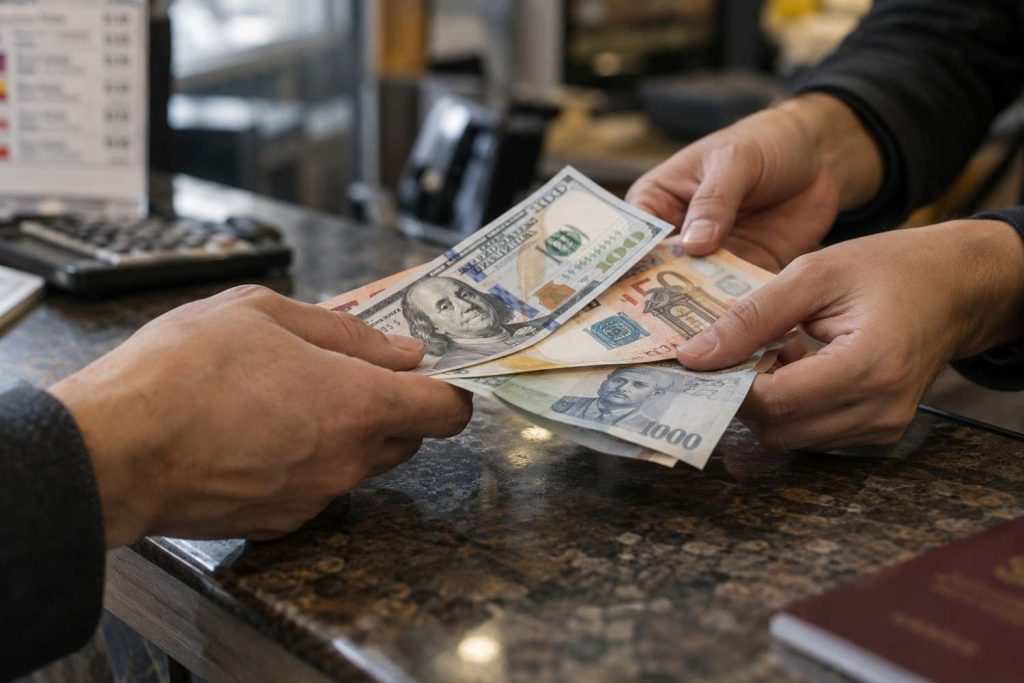
An exchange rate shows how much one currency is worth in another currency. It helps people and businesses see what they will pay or receive when money moves across borders.
A currency pair shows two currencies side by side. For example, a sample rate of 1 USD = 0.90 EUR means one US dollar is worth 0.90 euros. At that rate, $100 would equal €90 before any fees. If the rate changes to 1 USD = 0.80 EUR, $100 would equal €80. The dollar has lost value against the euro. It takes more dollars to buy the same amount of euros.
These are sample rates, not live rates. When you check a rate, look at which currency you have and which currency you need. Reading the pair in the wrong order can lead to a wrong cost estimate.
A business may agree to pay a supplier €1,000 for goods. If it holds US dollars, the cost in dollars depends on the exchange rate when it makes the payment. A change in the rate can raise or lower that cost, even if the supplier’s price stays at €1,000. This is one way to answer the question, how do exchange rates affect international trade? They change the cost of goods bought from other countries.
A business may sell goods to a customer who pays in euros. When the business changes those euros into dollars, the rate affects how much it receives. Understanding how do exchange rates affect international trade can help a business plan its prices and payments. For any business that uses global currency exchange, checking both the rate and transfer costs gives a clearer view of each deal.
Exchange rates affect international trade by changing the cost of goods sold across borders. A rate change can alter what a buyer pays in their own currency. It can also change what a seller gets when they convert a payment.
A buyer may agree to pay an overseas supplier in euros. If the buyer holds US dollars, a weaker dollar means they need more dollars to pay the same euro bill. The supplier’s price has not changed, but the buyer’s cost has gone up.
A US seller may charge a customer in euros. If the dollar gets weaker, that euro payment may be worth more dollars when the seller converts it. If the dollar gets stronger, the seller may get fewer dollars. The result also depends on the price and currency named in the sales agreement.
A US business owes a supplier €900. At a sample rate of €1 = $1.00, it pays $900. The dollar then weakens, and the rate becomes €1 = $1.10. The same bill costs $990, before fees.
So, how do exchange rates affect international trade? They can change the cost or value of a deal without changing its invoice price. Understanding how do exchange rates affect international trade helps businesses plan payments. Corporate foreign exchange support can help them review their options.
A currency gets stronger when it buys more of another currency than it did before. For a business in that currency’s home country, this can affect sales abroad and purchases from abroad.
A stronger home currency can make exports cost more for customers overseas. Say a US business sells an item for $100. If the dollar rises against the euro, a buyer in Europe may need more euros to pay that price. The higher cost may lead some buyers to order less or choose another supplier. Yet sales do not always fall. Quality, demand, and the prices set by each business also matter.
A stronger home currency can help a business buy goods from abroad for less. If a US business must pay a supplier in euros, it may need fewer dollars to cover the same euro bill. That can lower the cost of stock, parts, or raw materials.
This is one answer to how do exchange rates affect international trade? Rate changes can push export and import costs in different ways. Understanding how do exchange rates affect international trade helps a business review its prices and payment plans when it needs to send money abroad. The effect may take time to appear. Set prices, open orders, and existing contracts may keep costs the same until a new deal or payment is due.
A currency gets weaker when it buys less of another currency than it did before. A business may see a change in both its overseas sales and the cost of goods it buys from abroad.
A weaker home currency can make exports cheaper for foreign buyers. Say a US business sells an item for $100. If the dollar loses value against the euro, a buyer in Europe may need fewer euros to pay that price. The lower cost may help the business attract buyers. Sales may still depend on demand, product quality, delivery costs, and prices set by other sellers.
A weaker home currency can make imports cost more. A US business may need more dollars to pay the same bill from a foreign supplier. This can raise the cost of stock, parts, fuel, or raw materials. An exporter can face both effects at once. Foreign buyers may find its finished goods cheaper, while the materials it imports cost more. Higher costs may reduce the gain from each sale.
So, how do exchange rates affect international trade? A rate change can help sales abroad while raising supply costs at home. Understanding how do exchange rates affect international trade helps businesses plan orders and payments across their money transfer destinations.
Exchange rates can change what a business pays its suppliers and earns from its customers. This matters most when a bill uses a currency other than the one the business keeps.
A business may get a quote from an overseas supplier, then pay weeks later. If its home currency gets weaker during that time, it may need more money to pay the bill. It may choose to raise customer prices, but a higher price could affect sales. The same issue can affect money from customers abroad. A business may agree on a sale price, then get paid after the rate has changed. The amount it receives in its home currency may be higher or lower than planned.
A profit margin is the amount left from a sale after costs. For example, a store may set its price based on a $1,000 supplier bill. If a rate change raises that bill to $1,100 before payment, the store has less left from the sale. Other costs can affect the result, too.
A business needs to know when money will come in and when bills are due. Fast rate changes make it harder to set prices, plan cash flow, and estimate profit. This chance of losing money due to a rate change is called currency risk.
So, how do exchange rates affect international trade? They can change costs between a quote and its payment date. Understanding how do exchange rates affect international trade helps a business plan for each deal. Some businesses review forward contracts to set a rate for a later payment. The terms and fit of this tool depend on the business’s needs. Its reasons for transfer, payment dates, and the currencies used all matter.
A country’s trade balance compares the value of what it sells abroad with what it buys from abroad. A trade surplus means it sells more than it buys. A trade deficit means it buys more than it sells.
A weaker currency may make exports cheaper for foreign buyers. It may also make imports cost more at home. Yet a rate change alone does not decide the trade balance. Buyers must want the goods, and businesses must be able to make enough to meet demand. Existing contracts may keep prices in place for some time. Exporters may also pay more for materials they import.
Several factors can change how much people want a currency:
These factors can act at the same time. No single factor can tell a business which way a rate will move.
First, check which currency each contract uses. A business may sell in one currency and pay its suppliers in another. Next, list when each payment is due. This shows how long a rate may change between a quote and payment. Compare the full cost of changing and sending money. Check the rate, any fees, and the amount the other party will receive. Set a rate budget based on what the business can afford to pay. If the rate moves past that point, review the price and costs again.
Some businesses may also discuss payment and risk management options, such as a forward contract. The right choice depends on the amount, payment date, and contract terms. First Class Currency offers corporate currency support and international payments that businesses can ask about when planning a transfer. So, how do exchange rates affect international trade? They can change costs and sales across borders. Understanding how do exchange rates affect international trade can also help people plan large payments, including buying property abroad.
First Class Currency can help you review your currency needs and plan an overseas payment. If you are asking how do exchange rates affect international trade, our team can explain how a rate change may affect your costs. Contact us to discuss your currencies, payment dates, and options.
Exchange rates change what buyers pay for goods from other countries. They also change what sellers receive when they convert a foreign payment. The effect depends on the currencies used, the price set in the contract, and when payment takes place.
A strong home currency can help importers buy foreign goods for less. They may need less of their own currency to pay the same supplier bill. Fees, shipping costs, and supplier prices still affect the total cost.
No. A weak home currency may make exports cheaper for foreign buyers. Yet an exporter may pay more for imported parts, fuel, or raw materials. Demand and existing contracts can also affect sales and costs.
A business may set a price before it pays a supplier or receives a customer’s payment. If the rate changes during that time, its costs or income may change. The business may need to review its prices to cover its costs.
A business can check the currencies in its contracts, note payment dates, and compare the full cost of each transfer. It can also set a rate budget and ask about payment options that fit its needs. No plan can remove every risk.